WatchHSV
Huntsville's public police radio on a live map, every call transcribed and summarised, personal details hidden.
Overview
Police radio you can read
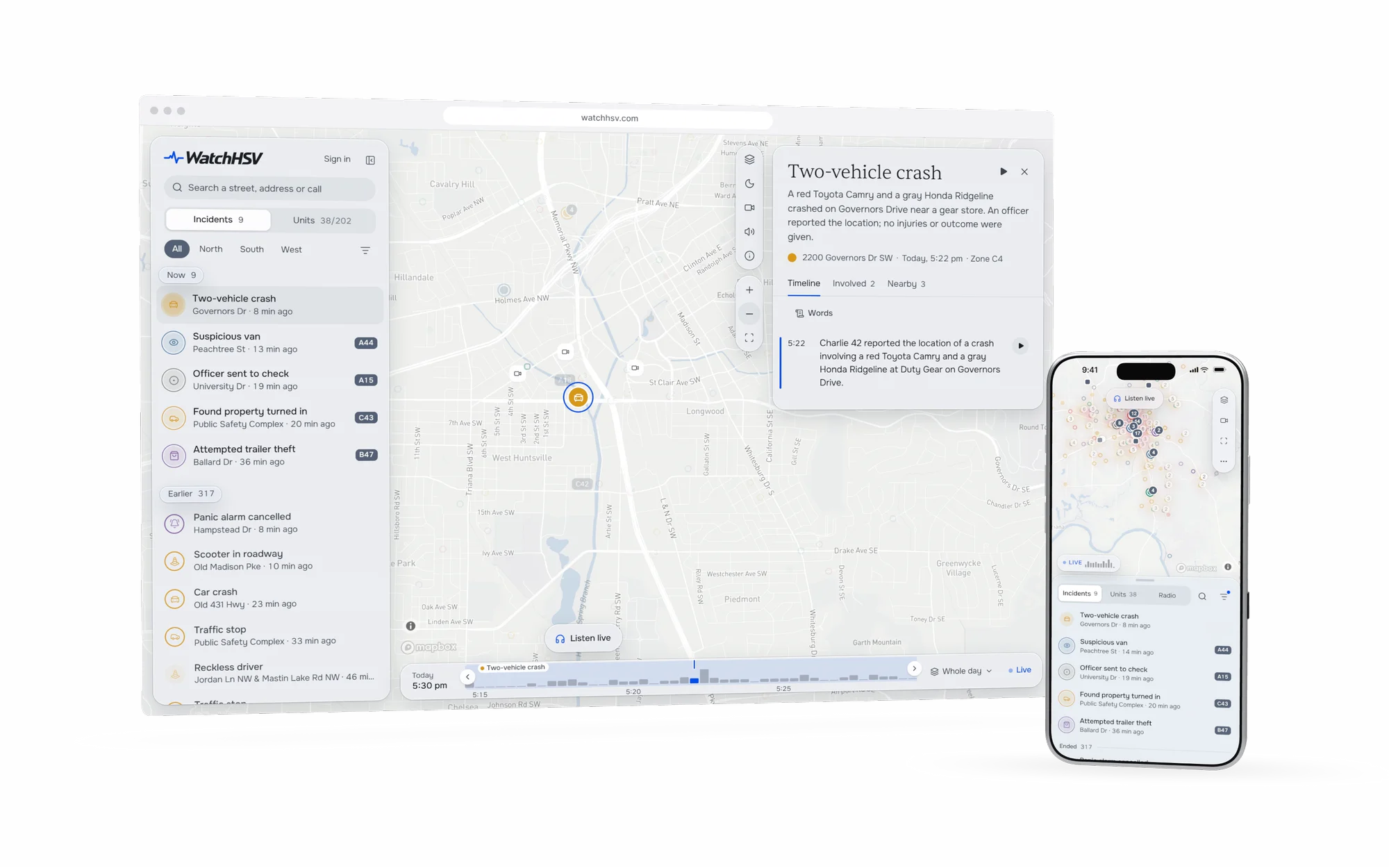
Huntsville's police dispatch radio is public. Anyone can listen on a scanner site. But raw radio is hard to follow: codes, unit numbers and street names said fast, with no map and no history.
WatchHSV turns it into something you can leave open and glance at. Each call lands on a live map with a plain-English summary, the units on it and where they are.
It's for people in Huntsville who want to know why there are sirens on their street, without learning radio codes. It grew out of HSV Cams, my wall of the city's traffic cameras, which now live inside it.
How it works
From radio to map
Every five seconds, new recordings come in from four Huntsville police channels on OpenMHz. AssemblyAI transcribes each call, Claude writes the summary and finds the place, and it appears on the map for everyone watching.
Hide first, show when safe
Radio calls are full of names, phone numbers, plates and home addresses. Anything not known to be safe stays hidden: names and plates are blurred, homes show only to the hundred block, and the public audio is bleeped.
The right model for each call
Most calls are a few words. In blind grading Haiku handled short calls fine but slipped on long ones, so short calls go to Haiku and long ones to Sonnet.
Stack
- Next.js 16
- React 19
- Tailwind CSS v4
- Mapbox GL
- AssemblyAI
- Claude
- MongoDB
- WebSockets
- Railway
- Vercel
- Cloudflare R2
Results
Live since October
- Calls on record
- 90k+
- Police channels
- 4
- Radio to server
- ~14 s
- Live traffic cameras
- 14
Questions
Want to know more?
Ask me anything about this project.